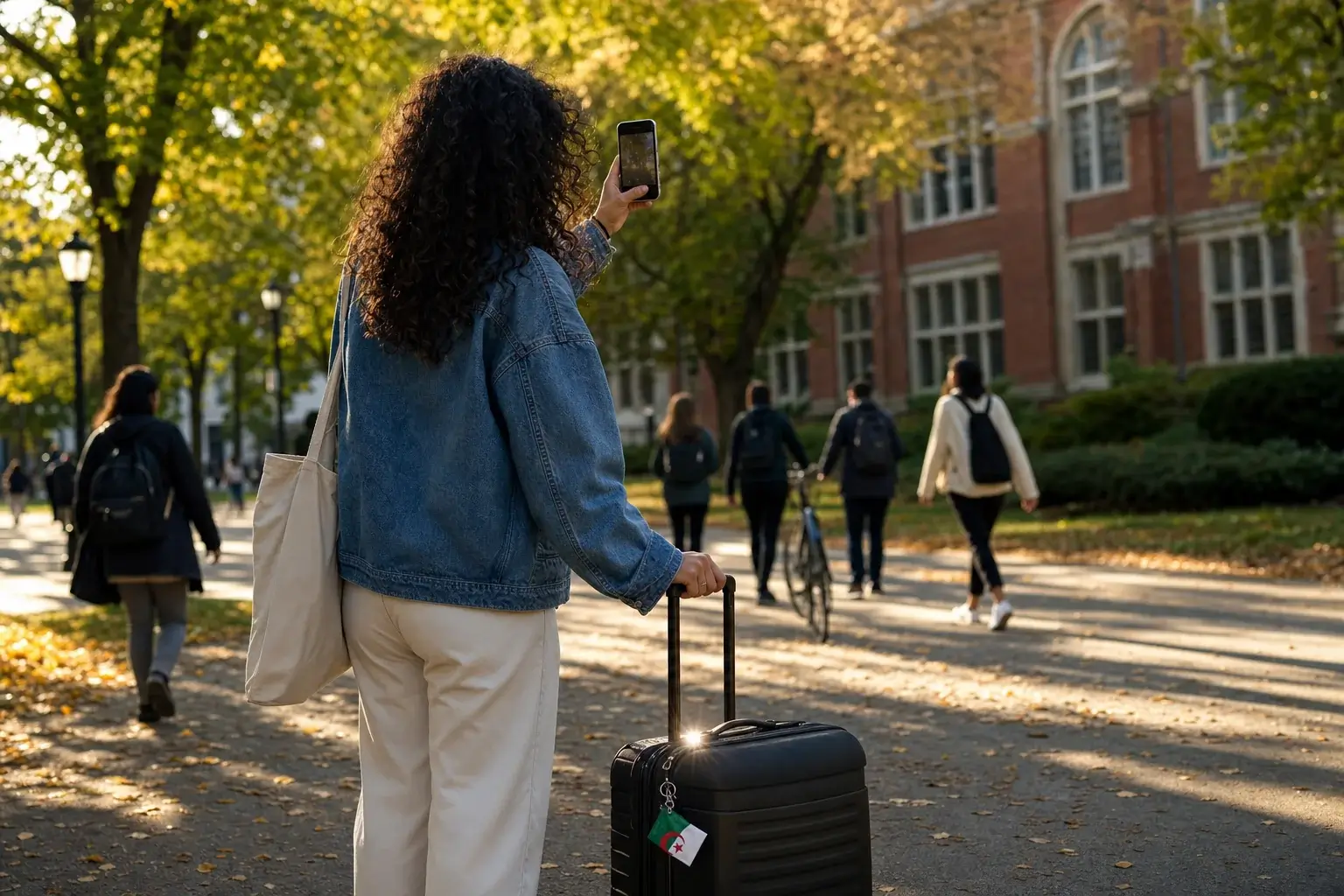
This is a composite story. The details come from dozens of real files our team handled this year, the student is every one of them at once. No single person went through exactly this sequence of events, but every event in it happened to someone.
The conversation that starts it
It usually starts at the dinner table, not in an office. A student brings up studying abroad almost as a test, watching for the reaction before finishing the sentence. Sometimes a parent has been waiting for this conversation for years and says yes before the plate is cleared. Sometimes it takes three attempts over three months before anyone takes it seriously.
What we tell families at this stage: the emotional decision and the financial decision are two separate conversations, and mixing them causes most of the early friction. Agree on the "why" first. The budget conversation goes easier once everyone is arguing from the same reason.
Picking a destination without pretending
The dream destination and the realistic destination are not always the same country, and the families who do best are the ones who say that out loud early. A student might want Canada because a cousin lives in Montreal. The budget might point more clearly toward Turkey or a French-language program with lower tuition and a shorter visa process.
We walk students through three questions before touching a single application form: what can the family actually pay per year, does the program lead somewhere after graduation, and how long can the process realistically take given the intake calendar. A destination chosen for prestige alone, with no honest budget check, tends to stall at the payment step months later. A destination chosen against a real number rarely does.
This is also where we say the quiet part: a slightly less glamorous country with a program that fits the budget beats a dream school the family can't sustain past year one.
Gathering documents, and the surprises
This is the stage that catches almost everyone off guard, including students who felt fully prepared going in. Birth certificates need apostilles. Diplomas need certified translations, and not every translator's stamp is accepted by every embassy. Bank statements need to show a specific balance held for a specific number of months, not just a lump sum deposited the week before submission.
The most common delay we see isn't a rejected document, it's a document nobody realized they needed until the file was already open. A police clearance certificate that takes six weeks to issue. A translation that has to be redone because the first version used the wrong transliteration of a name. A bank statement that arrives one week short of the required history.
What we tell students here: start the document collection before the application is even finalized, because paperwork timelines rarely match application timelines, and the paperwork is almost always slower. Keep physical and scanned copies of everything, and keep them organized by destination requirement, not by document type. A file that looks complete on a laptop can still be missing the one page an embassy actually checks first.
The wait
After submission, there is a stretch of time where nothing visibly happens, and it is often the hardest part psychologically, harder than the paperwork itself. Weeks pass. The inbox stays quiet. Students refresh portals that were never going to update that day.
We tell students to expect this wait and to use it, not just survive it. This is the window to start language preparation in earnest, to research housing options near campus, to talk to anyone who has lived in the destination city, and to get financial documents ready for the next stage rather than starting them cold once the acceptance letter lands. Momentum kept during the wait shortens the scramble that follows an acceptance.
The visa appointment
An acceptance letter changes the mood in a household almost overnight, but it also starts the clock on the part most students fear most: the visa appointment. Nerves show up in strange ways. Some students over-prepare answers to the point of sounding rehearsed. Others blank on questions they already know the answers to, simply because a stranger in a booth is now asking them.
Our advice here is almost boring in how consistent it is: answer only what is asked, keep answers short and true, and bring every document listed even if it feels redundant. Officers are trained to notice a file that has been padded to look impressive, not a file that is complete and calm. A folder that is organized in the order the checklist lists it moves faster than one that is technically complete but disordered.
Booking the flight
Booking the flight is the moment the trip stops being theoretical. Airport codes get memorized. Bags get weighed on a bathroom scale twice. A family group chat that had gone quiet during the paperwork months suddenly fills up again, this time with luggage weight limits and airport pickup logistics instead of document checklists.
We tell students to book once the visa is actually stamped, not before, no matter how tempting an early fare looks. We also tell them to pack fewer clothes and more documents than instinct suggests: the paper copies of everything that got them the visa should travel in a carry-on, not checked baggage, because that folder is still needed at arrival.
Arrival and the hard first week
Landing is the easy part. The hard part is the week after, and almost nobody warns students about it clearly enough beforehand. A new city, a new language spoken at a different speed than any classroom prepared them for, a bank account that has to be opened before a phone plan can be activated, which needs an address that hasn't been confirmed yet. Homesickness tends to arrive around day four or five, right after the adrenaline of arrival wears off and right before the first class actually starts.
What we tell students before they leave: the first week is supposed to be hard, and hard does not mean it was the wrong decision. Small routines help more than big plans. Find the closest grocery store on day one. Learn one bus or metro line before worrying about the rest of the city. Call home on a schedule instead of only when something goes wrong, because that turns the call into a source of stability rather than a crisis line.
The moment it starts to feel worth it
It rarely arrives on day one, and it almost never arrives the way anyone expected. Sometimes it's the first time a student understands a joke in the local language without translating it in their head first. Sometimes it's the first grade back on an assignment that proves the classes are actually manageable. Sometimes it's simply walking to campus on an ordinary Tuesday and realizing the walk has become familiar.
That moment is the whole reason for the months before it: the dinner table conversation, the honest budget math, the apostilles and translations, the quiet wait, the nervous appointment, the packed bags. None of it is glamorous while it's happening. All of it is what gets a student from a maybe to a first semester.
If any part of this sounds like where you are right now, our study abroad services walk through destination selection, documents, and visa preparation with the same honesty described above. You can also get in touch to talk through your own situation before deciding anything.
Keep reading

How to Apply for an Ausbildung from Algeria
Where you register, how you apply to a company, the documents, the German embassy visa file and appointment in Algiers, step by step with official sources.

TCF vs TEF (2026): Which French Exam Do You Actually Need?
Study in France, immigrate to Canada, apply to Quebec, or naturalize: which exam and which version fits your goal, and how scores convert to CLB. A clear map for Algerians.
Want the next one in your inbox?
One email when we publish something worth reading. Visa changes, deadlines, honest advice. Nothing else.